Supergrow review: this AppSumo offer is aimed at turning professional expertise into LinkedIn content, with a workflow for drafting, review and scheduling. The interesting part is gathering real ideas through interviews rather than asking an AI writer to invent opinions for you.
My verdict is to consider it when people in the business have useful experience but struggle to turn that experience into publishable posts. Test whether the drafts preserve their actual meaning and voice. I have not independently tested the interviews, publishing integration or analytics.
Check the live Supergrow AppSumo offer →
Watch the Supergrow AppSumo demonstration
What is Supergrow?
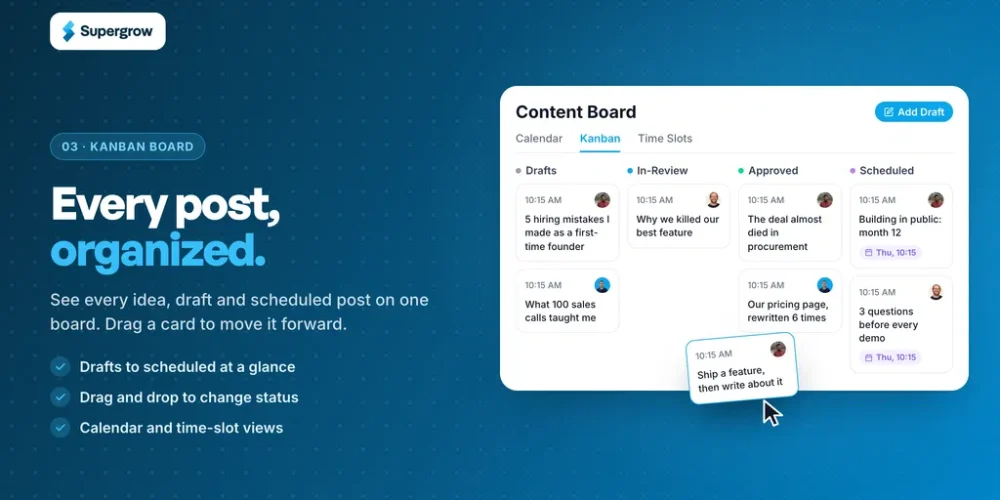
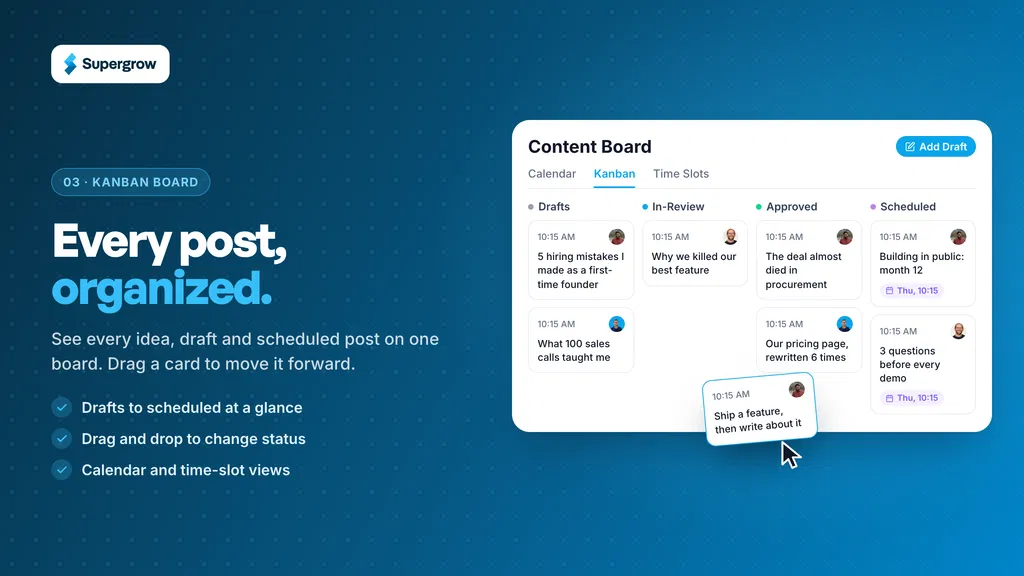
Supergrow is a LinkedIn content platform for individuals and teams. Its current presentation combines Content DNA, an AI interview feature and a board that moves posts through production stages. The intended benefit is a more repeatable way to capture and publish what a person knows.
That is a different starting point from generating a month of generic motivational posts. A founder’s explanation of a difficult customer decision, a technical lesson or a mistake can be useful because it contains context that only they can provide. The tool should help extract that material without manufacturing a personal story.
Supergrow AppSumo pricing
The three lifetime tiers checked on 23 November 2026 showed these account allowances.
| Tier | Price | Accounts |
|---|---|---|
| 1 | $80.10 | 1 |
| 2 | $143.10 | 3 |
| 3 | $323.10 | 10 |
The listing places custom approval chains and team-level analytics at Tier 2 upwards. Additional accounts appear as optional add-ons; check their current price and terms in the basket rather than assuming the base licence includes future expansion.
Count the actual people whose LinkedIn accounts you will manage. A solo consultant and a business coordinating several experts have different requirements. Confirm the intended account type and feature access before buying for a company-wide programme.
AI interviews: the input is the advantage
The official website describes a short PostCast conversation that produces several draft posts. That is a vendor description of the workflow, not an independently measured output guarantee for every interview.
Choose a specific experience before starting. “Talk about leadership” is broad. “Explain a time you changed a project after customer feedback” gives the interview something concrete to explore. Useful follow-up questions ask what happened, what you considered and what you would do differently.
Review each draft against the original account. Did it turn uncertainty into certainty? Did it make an ordinary observation sound like a dramatic failure? Did it add a result the speaker never claimed? Those changes can make content more attention-grabbing while making it less accurate.
Content DNA needs representative examples
The official Content DNA guide describes a framework for maintaining a person’s LinkedIn identity. Give it examples that reflect how the person actually communicates, including the level of detail and qualifications they prefer.
Separate voice from recurring slogans. A post can use familiar words and still misrepresent the author’s judgement. Check whether the draft makes the kind of claim the person would willingly explain in a client meeting.
Keep each person’s material distinct. For a team programme, shared themes can be useful, but the same story should not appear as several employees’ personal experience. Ask each expert for their own observation or contribution.
Choose content pillars from real work
Start with the questions customers and colleagues repeatedly ask. Add lessons from delivery, decisions made during projects and explanations of common misunderstandings. These topics give the writer something useful to say beyond announcing that the company is busy.
A simple weekly plan might include one explanation, one concrete example and one informed opinion. The exact frequency matters less than having enough substance to sustain it. If every draft needs invented drama to seem interesting, revisit the topic rather than adding a stronger hook.
Keep a small idea bank with the source person and supporting context. This makes future interviews more productive and helps a reviewer check whether a story remains accurate as it becomes a shorter post.
Review and approval are part of production
Use clear stages such as draft, in review, approved and scheduled. Define who can move a post forward and what approval covers. The named author should recognise the final message, including late edits to the opening or conclusion.
Test the revision path. If a reviewer asks for a change, the draft should return to a visible state rather than remaining apparently approved. Confirm how the account handles a scheduled item that is edited after approval.
The October product update describes recent changes and also identifies work still planned. Check current availability before relying on a future approval feature as part of your operating process.
Scheduling and engagement
Preview the final post on the intended account. Check paragraph breaks, links, mentions and any attached media. A clean draft in the editor can still need adjustment for the actual published format.
Leave room to respond after publication. A useful post can lead to questions that deserve the author’s attention. Scheduling should reduce administration, not create the appearance of a conversation nobody is present to continue.
For visual support, my VistaCreate review examines a design-production option. Use graphics to explain the point rather than decorating every post with an unrelated stock image.
Analytics should support a useful programme
Define what the business hopes to achieve: clearer expertise, relevant conversations, recruiting interest or qualified enquiries. Impressions and engagement can help understand distribution, but they are not the same as business results.
Review topics and examples over time instead of copying the format of one unusually successful post. A broad personal story may reach many people while a narrower technical explanation reaches the smaller audience you actually serve.
For teams, avoid judging people only by a leaderboard. Different roles, audiences and posting histories affect the numbers. Use reporting to learn which contributions help the programme, and keep participation practical for the people doing the work.
Supergrow versus RobinReach
My RobinReach review covers a broader social-publishing and inbox platform. Supergrow is more focused on capturing expertise and coordinating LinkedIn content. Compare the workflow you need rather than assuming a longer list of networks is always better.
If the work also involves client deliverables and approvals outside social posts, my Nifty review covers a separate project workspace. Decide where the authoritative approval record lives.
Does it guarantee LinkedIn growth?
No. Assess the quality and relevance of the content and measure actual outcomes.
Who should test it first?
A professional or small team with real expertise to capture and a repeatable review process.
My Supergrow verdict
Supergrow could be useful when the bottleneck is extracting good ideas from busy people. Test an interview, approve several complete posts and choose the account capacity that fits the people who will use it.
See Supergrow pricing, limits and current availability →
Sources: current AppSumo listing and deal terms and the official sources linked in this review. Prices in USD, checked 23 November 2026; verify the live checkout total.