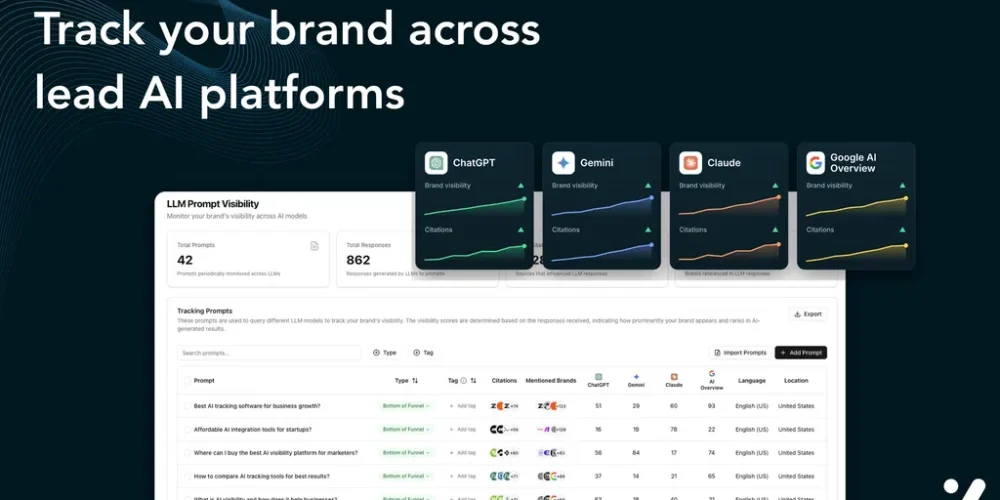
Visby review: this AppSumo deal is for monitoring how AI answer systems mention your brand and turning that information into work for your website. It is an AI-visibility and SEO tool, not a promise that a model will recommend your business after you complete a checklist.
My verdict is to consider it when you have a defined set of buyer questions and someone able to act on the findings. A dashboard is less useful if nobody reviews the cited sources or improves the underlying content. I have not independently tested its monitoring accuracy or recommendations.
Check the live Visby AppSumo offer →
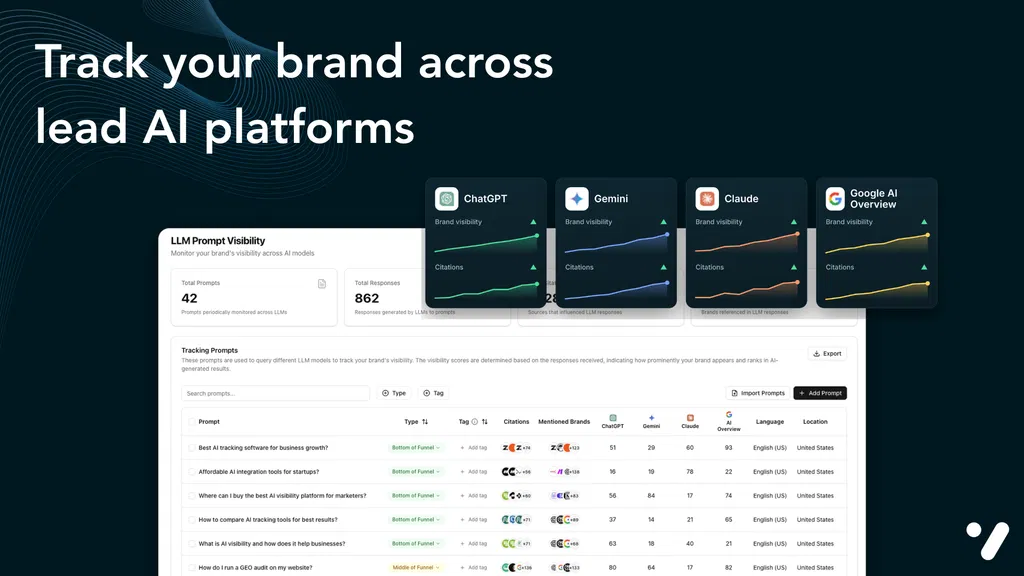
Watch the Visby AppSumo demonstration
What is Visby?
The official Visby website describes tracking brand mentions, competitor gaps, citations and improvement tasks across AI search experiences. Its product presentation also includes content generation and connections to analytics and search data.
The useful question is what the tool can help you learn. If buyers ask for a product category and competitors appear while your brand does not, you can investigate the sources and information being surfaced. That observation is a starting point for research, not proof of a single ranking factor.
Visby AppSumo pricing and prompt capacity
The first four of six tiers checked on 23 November 2026 showed these allowances.
| Tier | Price | Seats | Domains | Tracked prompts | Articles / month |
|---|---|---|---|---|---|
| 1 | $71.10 | 1 | 1 | 10 | 2 |
| 2 | $161.10 | 3 | 1 | 15 | 5 |
| 3 | $332.10 | 6 | 3 | 60 | 10 |
| 4 | $548.10 | 10 | 6 | 150 | 20 |
Check the exact engines, tracking cadence and integrations included in your tier. A marketing page showing several AI platforms does not establish that every entry licence monitors them in the same way.
Ten tracked prompts can be sufficient for a narrow pilot but is a small sample of a broad market. Choose the questions deliberately rather than filling the allowance with variations that all test the same idea.
Prompt selection determines what the report means
Start with real buyer questions. Include category discovery, comparison and brand-specific evaluation where relevant. Keep a record of the audience, location and intended decision behind each prompt.
Separate prompts that name your brand from those that do not. A model mentioning a brand explicitly requested in the question is different evidence from recommending it unprompted among alternatives.
Use a stable baseline before changing the set. If you replace difficult prompts with easier ones, the visibility score can improve without the business becoming more visible for the original questions. Label changes so later comparisons remain meaningful.
Visibility is not search volume or market share
A score based on selected prompts describes that monitored sample. It should not automatically be presented as your share of all AI searches or all potential buyers. The number depends on the questions, engines and measurement method.
Ask how repeat runs, citations and brand mentions are counted. A mention, a recommendation and a linked citation are different outcomes. Review examples of the underlying answers rather than relying only on the summary chart.
Keep the date and configuration with reports. AI responses and source selection can change, so one snapshot is not a permanent statement about your brand.
What Google actually says about AI search
Google’s AI-features guidance says established SEO practices remain relevant and there are no special additional technical requirements for AI Overviews or AI Mode. It also says eligibility does not guarantee crawling, indexing or serving.
That supports a practical approach: make important information accessible, useful and accurate before chasing a proprietary score. A monitoring tool can help identify questions and gaps, but it should not become a reason to publish unsupported claims or unnecessary markup.
Google’s generative-search optimisation guide emphasises useful, distinctive content and the usual technical foundations. Use that primary guidance alongside a vendor’s recommendations.
Citation research should lead to original work
Read the pages being cited and ask what information they provide. They may contain clear product details, a useful comparison, original evidence or a concise answer. Identify the reader need rather than copying the page’s wording or structure.
If you create an alternative article, add something your business can substantiate: a worked example, clear limits, a practical decision framework or genuine experience. Rewriting a cited competitor page is not the same as creating a more useful source.
Keep claims and supporting material connected. My Press Ranger review covers a separate PR research tool, including the distinction between paid distribution and independent coverage. Visibility work should preserve those distinctions.
Task recommendations need prioritisation
Review each suggested task for business value and accuracy. A broken page, an unclear product explanation and a minor formatting change do not have the same importance. Assign an owner and an observable completion condition.
Verify the result after implementation. A task marked complete by software may still need checking in the live page and the surrounding visitor journey. Keep the original problem and the change made so you can assess whether it helped.
My Nifty review covers a workspace for coordinating this kind of work. The useful outcome is a completed improvement, not a growing list of suggested tasks.
Analytics and business outcomes
If you connect analytics or Search Console, confirm the property and data scope. A report should make clear which site, period and filters it represents. Do not combine different measurement methods without explaining the difference.
Track useful visits and downstream actions where your setup permits it. A brand mention can be valuable without a click, but a visibility change should not be automatically translated into revenue.
For a store, check that product names, descriptions, availability and prices are accurate in the systems you control. A monitoring score cannot compensate for inconsistent product information.
A practical Visby pilot
- Select a small, representative set of buyer prompts.
- Confirm engine access and measurement cadence.
- Inspect mentions and cited sources manually.
- Complete a few justified content or technical improvements.
- Review trends alongside actual business evidence.
For the page-building side, my Nexter review examines a WordPress option. Keep the visitor’s experience central when implementing recommendations.
Does Visby guarantee AI citations?
No. Treat it as a research and monitoring tool.
Is a higher score proof of market-wide growth?
No. Understand the selected prompt sample and the metric definition.
My Visby verdict
Visby could help a team turn AI-visibility questions into a measurable workflow. Choose prompts carefully, verify recommendations and invest in useful improvements rather than a score alone.
See Visby pricing, limits and current availability →
Sources: current AppSumo listing and deal terms and the official sources linked in this review. Prices in USD, checked 23 November 2026; verify the live checkout total.